New Irvington Tunnel
Summary
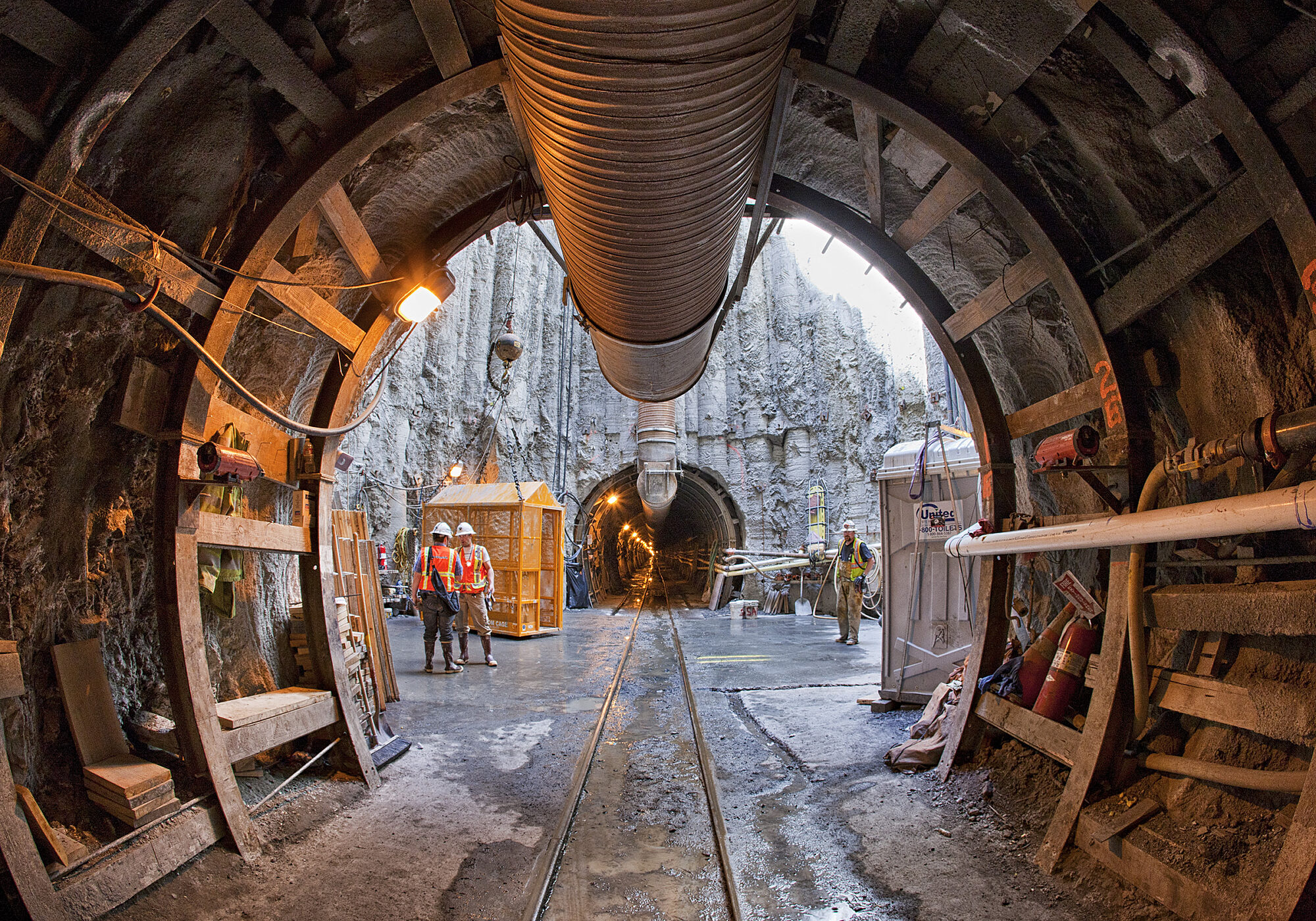
The existing Irvington Tunnel is part of the San Francisco Public Utilities Commission’s (SFPUC) Hetch Hetchy Water System and delivers approximately 85% (220 million gal/day [832.8 million L/day]) of the San Francisco Bay Area’s water. Built around 1930, the tunnel cannot be taken out of service without impacting the water supply, and it has not seen an inspection since 1966. The New Irvington Tunnel project bypasses the existing tunnel, allowing the original tunnel to be removed from service for inspection and maintenance. Furthermore, the New Irvington Tunnel affords welcome redundancy, providing a continual water supply to the Bay Area in the event of earthquake or other major disruption.
- 14.5-foot excavated diameter (4.4 m) water conveyance tunnel
- 3.5-mile ((5.6 m) alignment, between two active faults
- Final lining is a 102-inch-diameter (2,590 mm) welded steel pipe
- 7.8 million pounds (5 million kg) of cement were used for pre-excavation grouting
Scope of Work
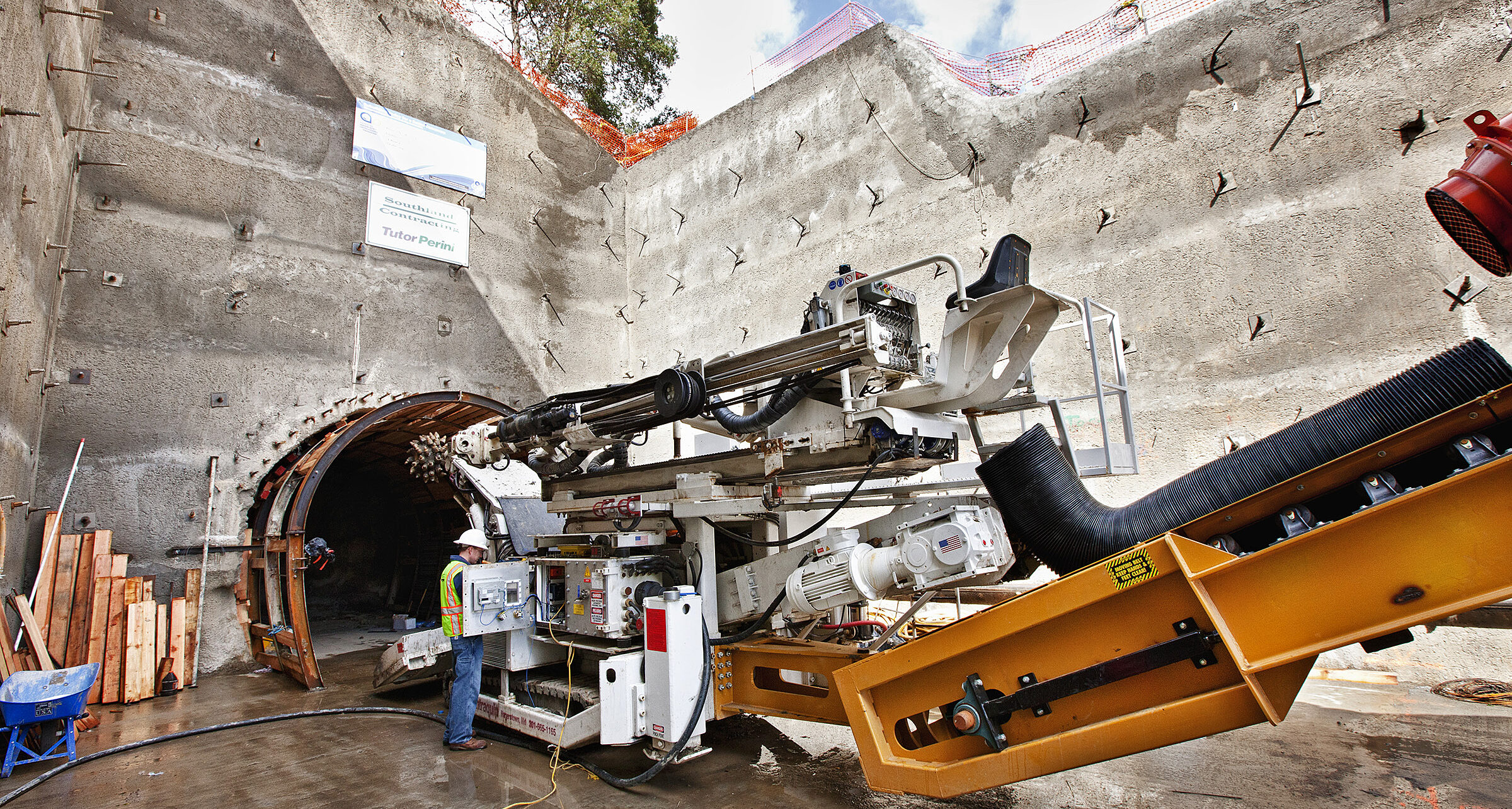
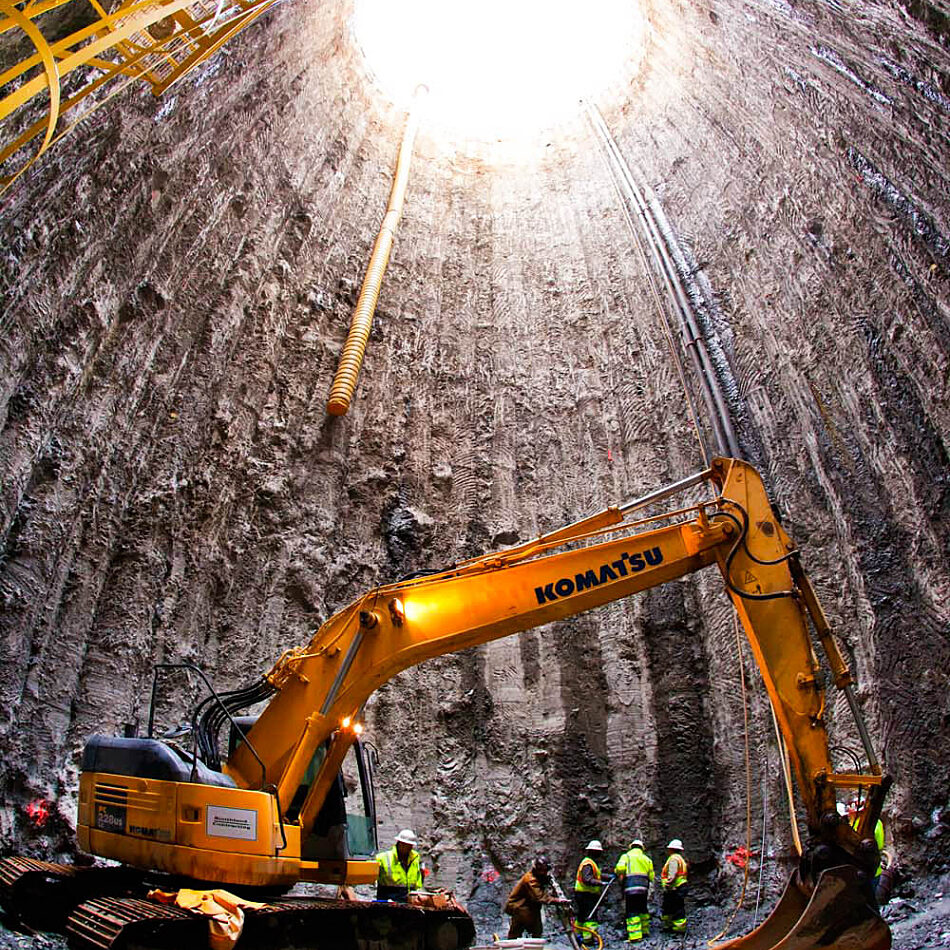
Delve Underground was the lead designer for the tunnel, shafts, and portals, and provided engineering services during construction. We also prepared a Geotechnical Baseline Report. Facilities include the new tunnel with initial and final linings; overflow shaft; tunnel portals; a manifold and pipelines to facilitate the connection of Bay Division Pipelines 1, 2, 3, 4, and the new Pipeline 5; and related ancillary appurtenances.
Challenges & Innovations
Ground conditions along the tunnel alignment consisted of interbedded layers of sandstone and shale, with several smaller fault zones. Abrupt changes in ground conditions and mixed ground conditions that exhibit ground behaviors of multiple ground classes were also present along the tunnel alignment.
Groundwater inflows occurred throughout a significant portion of the tunnel. Design challenges included 700 feet (213 m) of cover and a high hydrostatic head with potential water inflows of up to 1,200 gpm (4,542 L/min).
Special steel pipe design measures were required at four fault zones, where there is a risk of sympathetic fault displacements.
-
2015 Project of Year Award
American Public Works Association—NorCal Section
-
2016 Region 9
Outstanding Construction Project, ASCE Region 9